
Non-Surgical Rhinoplasty in Oakville

Non-surgical rhinoplasty uses dermal filler to smooth the line of a dorsal hump, lift a drooping tip, or improve small asymmetries, without surgery and without a long recovery.

One thing should be clear before you read any further. Filler adds volume, so this treatment cannot make your nose smaller. It reshapes and rebalances the nose you already have, and if a narrower or shorter nose is what you want, surgery is the honest answer.
OR Call (289) 885-5660

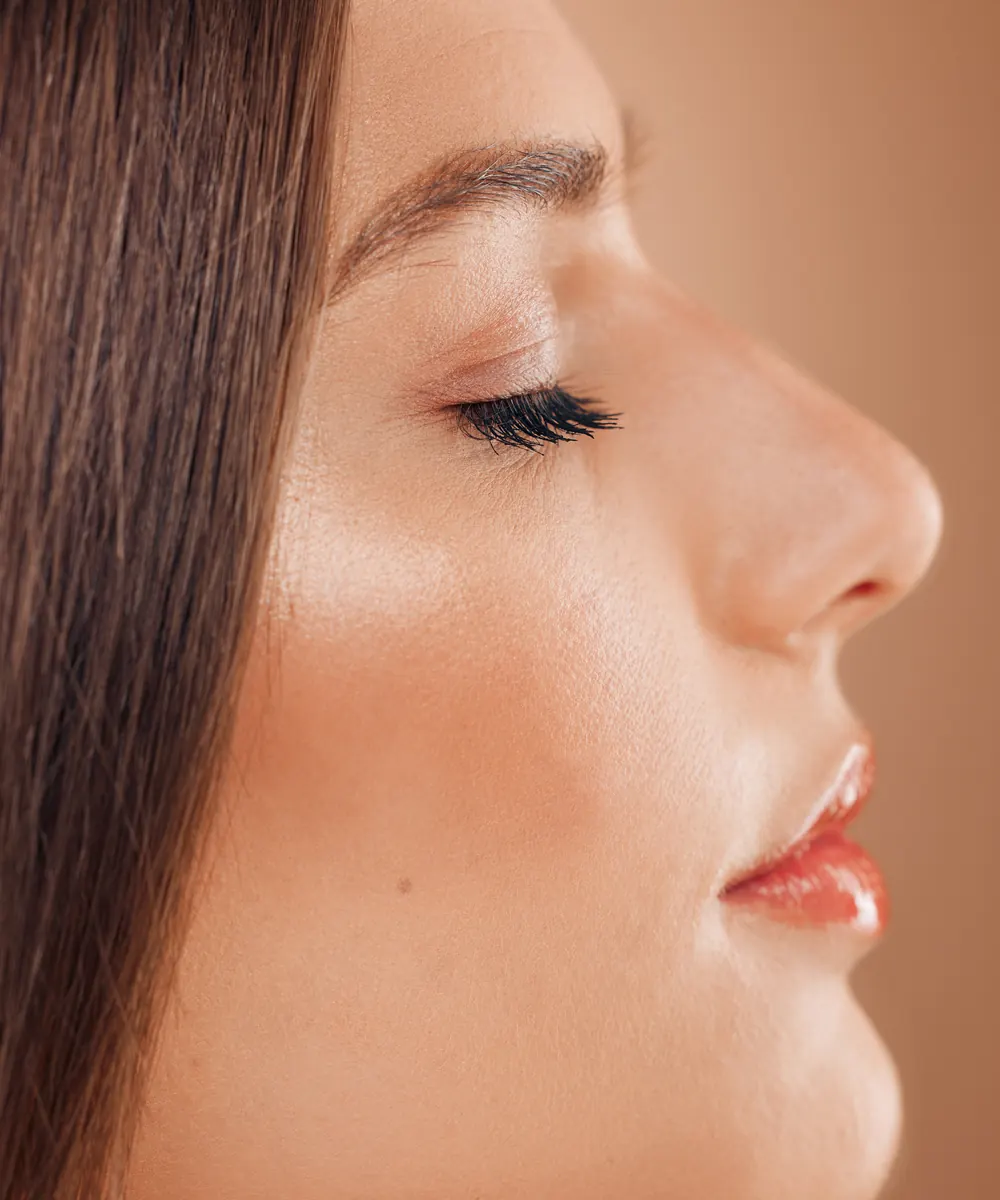
Studio profile of a woman showing the bridge and tip of the nose in natural light

What Is Non-Surgical Rhinoplasty?

Reshaping the profile of the nose with filler rather than surgery.

Non-surgical rhinoplasty, sometimes called a liquid nose job, uses small, carefully placed amounts of hyaluronic acid filler to change the shape of the nose. Surgery removes and repositions bone and cartilage. This treatment does the opposite, adding tiny volumes of gel at chosen points so the outline of the nose reads differently.

The most common use is softening a dorsal hump. Filler placed above and below the bump can create a straighter line down the bridge, so the eye no longer stops at the hump, even though nothing has been removed. It can also support a tip that sits low, add height to a flat bridge, and even out minor irregularities.

The products are from the same family of hyaluronic acid gels used elsewhere on the face, and you can read about them on our dermal fillers in Oakville page. Whether your nose is a good candidate is decided at consultation, never assumed.

Cosmetic filler being injected into the bridge of the nose during non surgical rhinoplasty

What It Can Change, and What It Cannot

The limitation is worth understanding before you book.

Because filler adds volume, non-surgical rhinoplasty can only build the nose up. It cannot reduce a nose that is wide, long or large, and a clinic that suggests otherwise is not being straight with you. What it can change is how the nose reads to the eye, which for many people is what they actually wanted. It may help with:

  • A small to moderate dorsal hump on the bridge
  • A tip that droops, particularly when you smile
  • A bridge that is flat or lacks height
  • A profile line that looks uneven from the side
  • Minor asymmetry or a slight visual deviation
  • A small irregularity left after healed surgery

It suits some people poorly. A nose that is already large or wide, a significant structural deviation, difficulty breathing through the nose, or thin skin over a previous implant all point away from filler. It is generally not advised during pregnancy or breastfeeding, with active infection in the area, or where certain medications and medical conditions apply.

Profile portrait of a woman with hair pulled back showing a smooth nasal line

Safety, and Why Experience Matters Here

The nose carries more vascular risk than most filler sites.

Most clinic pages leave this part out. We would rather not. The nose has a dense and variable blood supply, its vessels sit close to the surface, and there is little room for swelling. That makes it a higher risk area for vascular complications than the cheeks, lips or jawline. If filler is placed into a vessel, or presses hard on one, blood flow to the skin can be interrupted, which in rare cases can cause tissue damage and, very rarely, problems with vision.

These events are uncommon, and conservative volumes, slow placement and sound technique all reduce the likelihood. They are still real, and you should hear about them from the clinic rather than find them out afterwards. It also means the answer is sometimes no. If your anatomy does not favour treatment, we will say so.

Your treatment is led by Lin Nickel, our Advanced Aesthetic Nurse Injector, with more than 10 years of experience and certifications through Allergan (Botox) and Galderma (Dysport) for neuromodulator treatments, under the medical direction of Dr. Andrea Garcia, MD CCFP. Meet the team behind your care.
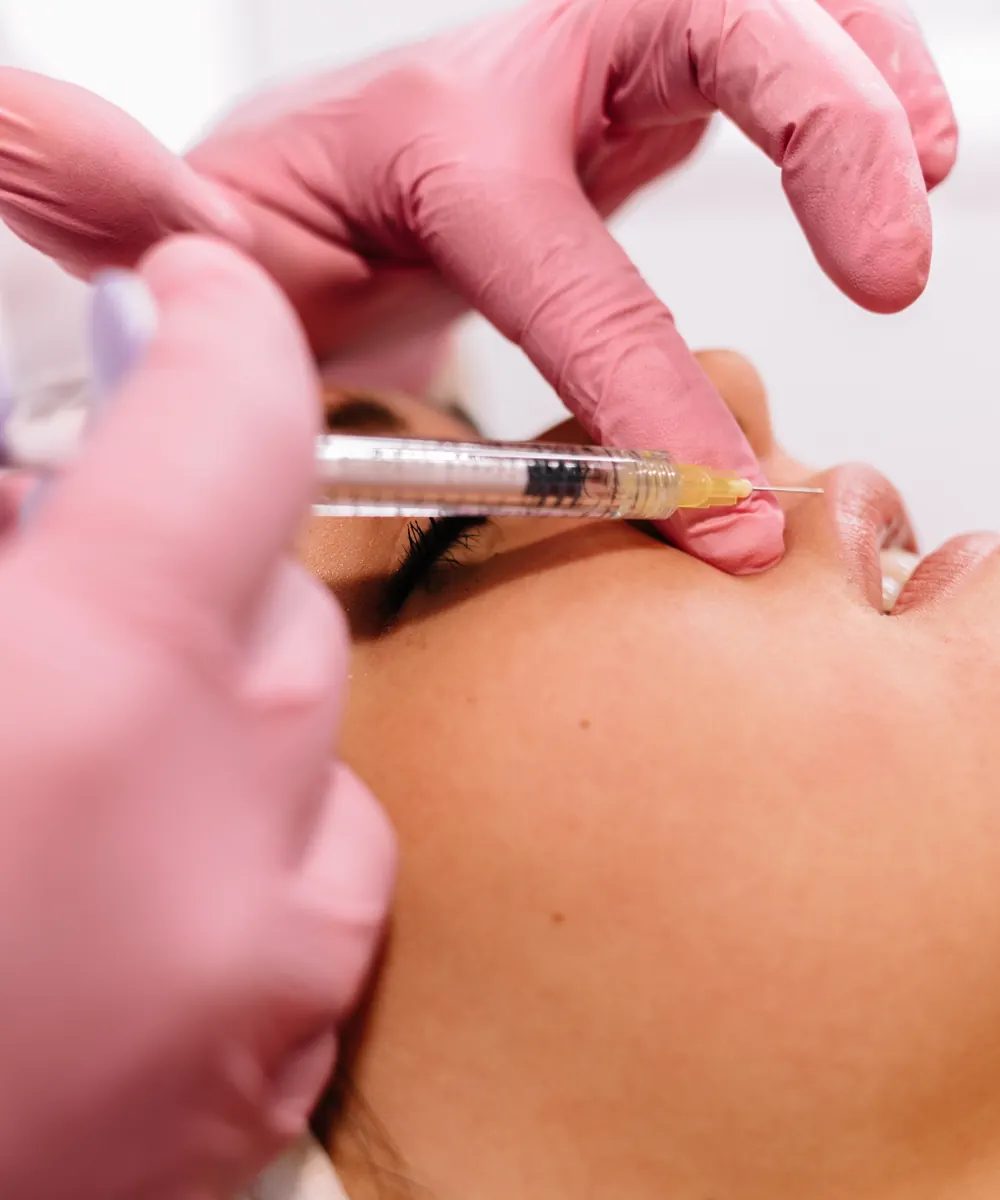
Practitioner performing a facial filler treatment in a clinic setting

What to Expect at Your Appointment

A consultation-first process, with the honest conversation first.

  1. AssessmentYour provider studies the nose from the front, side and below, and reviews your history.
  2. Honest planYou are told plainly what filler can and cannot change for your nose, and whether another approach suits you better.
  3. PreparationThe skin is cleansed and prepared, and comfort measures such as topical numbing are considered.
  4. TreatmentSmall volumes are placed slowly at the planned points, with the shape reviewed as work goes on.
  5. AftercareYou leave with clear guidance on what to watch for and when to call us.

The appointment is short and most people go back to their day afterwards. Read our aftercare guidance before your visit so you know what the following days look like.

Results and Recovery

Visible straight away, settled within a couple of weeks.

Unlike a muscle-relaxing treatment, filler is visible as soon as it is placed, so you generally see the change before you leave. Mild swelling and small bruises are common in the first few days and can make the nose look fuller than the final result, which is best judged at about two weeks.

Your provider will usually advise you to leave the area alone, avoid pressing or massaging the nose, and be careful with anything resting on the bridge, including heavy glasses, for the first couple of weeks.

Results with hyaluronic acid filler often last around a year, though this varies with the person and the amount of product used. One thing to act on rather than wait out: unusual or increasing pain, skin that turns pale or dusky, or any change in your vision should be reported to the clinic immediately.

Non-Surgical Rhinoplasty Pricing in Oakville

From $600

Filler based non-surgical rhinoplasty starts from $600. A thread based approach is listed separately on our price list. Because the total depends on how much product your plan calls for, the final figure is confirmed at your consultation.

Frequently Asked Questions About Non-Surgical Rhinoplasty in Oakville

Still deciding? These are the questions we hear most.

If your question is not here, our team is glad to answer it. The clearest answers come from a consultation, where your provider can assess your nose and say what is realistic.

Can non-surgical rhinoplasty make my nose smaller?
No. Filler adds volume, so it can build the nose up but never reduce it. What it can change is how the nose reads to the eye, for example by smoothing the line over a dorsal hump so the profile looks more balanced. If you want a smaller or narrower nose, surgery is the honest answer.
How long does non-surgical rhinoplasty last?
With hyaluronic acid filler the result generally lasts around a year, though this varies from person to person and with the amount of product used. The nose tends to hold filler well because there is little movement in the area. Your provider can give a more personalised estimate once they have assessed you.
What are the risks of filler in the nose?
The nose has a dense blood supply and less room for swelling than most filler sites, which makes it a higher risk area for vascular complications. These events are uncommon, but serious when they happen, so we discuss them properly beforehand. Unusual pain, skin that turns pale or dusky, or any change in vision should be reported to us straight away.
Does non-surgical rhinoplasty hurt?
Most people find it more comfortable than expected. The area is small, the injection points few, and comfort measures such as topical numbing can be considered. You may feel pressure rather than sharp pain, and tenderness for a day or two afterwards is common.
Can I have it if I have already had surgical rhinoplasty?
Sometimes, and it is a common reason people ask about this treatment. Filler can occasionally refine a small irregularity left after surgery, but scarred tissue behaves differently and the risk profile can change. Your provider will need the details of your surgery first.
Should I choose filler or threads for my nose?
They suit different noses rather than one being better. Filler smooths and builds, so it suits a dorsal hump or a low bridge. Threads lift and define, so they are often considered for tip position. You can read about thread rhinoplasty in Oakville, and your provider will recommend whichever matches your anatomy.

Book Your Non-Surgical Rhinoplasty Consultation in Oakville

If a hump on the bridge or a tip that sits low is what you notice first, a consultation is the place to start. We will assess your nose and tell you honestly whether filler can give you what you are after.

IPL

A Category of Non-Invasive Treatment

IPL (Intense Pulsed Light) uses broad-spectrum light energy to target skin imperfections such as pigmentation, sun damage, redness, and acne.

IPL: Regular $500, Now $400

Hair Removal

A Category of Non-Invasive Treatment

Hair Removal is a non-invasive cosmetic procedure that is designed to permanently reduce or eliminate unwanted hair.

Hair Removal: Regular $80, Now $40

Thread Lift

A Category of Minimally Invasive Treatments

The Thread Lift is an instant and invisible procedure that uses advanced, dissolvable sutures meticulously placed beneath the skin to gently lift and redefine facial and neck contours.

Thread Lift: Regular $1600, Now $800

Lip Filler

A Category of Minimally Invasive Treatments

Lip filler is a cosmetic procedure that involves injecting hyaluronic acid into the lips to add volume, enhance shape, and smooth out vertical lip lines.

Lip Filler: Regular $550, Now $399

Microneedling

A Category of Minimally-Invasive Treatment

Microneedling is a highly effective, minimally invasive procedure that harnesses your body’s natural healing process to rejuvenate the skin from within.

Microneedling: Regular $375, Now: $300

Hydrofacial

A Refreshing Non-Invasive Approach

The hydrofacial is a highly sought-after, non-invasive facial that utilizes medical-grade aesthetic device for a complete skin renewal experience.

Hydrofacial: Regular $200, Now $99