
Microneedling for acne scars may soften the depth and texture of certain scars by prompting your skin to build new collagen beneath them. It tends to work best on rolling and boxcar scars, usually takes a series of sessions, and improves scars gradually rather than erasing them.
Before you commit to anything, we assess which types of scarring you have, whether your acne is settled enough to treat, and whether microneedling is the right tool for your skin.

What the research suggests, and why it is a gradual process.
Most acne scars people ask us about are atrophic scars, the depressed marks that sit below the surrounding skin. Microneedling, also called collagen induction therapy, uses very fine needles to create controlled channels in the skin. That starts a healing response in which growth factors are released and new collagen may be laid down, which can gradually soften the look of depressed scars.
There is reasonable research behind this. In a small study of patients with atrophic acne scars treated over a course of sessions, skin biopsies showed a significant increase in collagen. The American Academy of Dermatology notes that studies suggest acne scars may fade by around 50 to 70 percent. Those are study findings rather than a prediction for your skin, and results vary from person to person.
At our clinic we use the DP4 pen, the Dermapen 4. Our page on DP4 microneedling in Oakville explains the device, the appointment and what the treatment can help beyond scarring. Microneedling is one of our minimally invasive treatments.
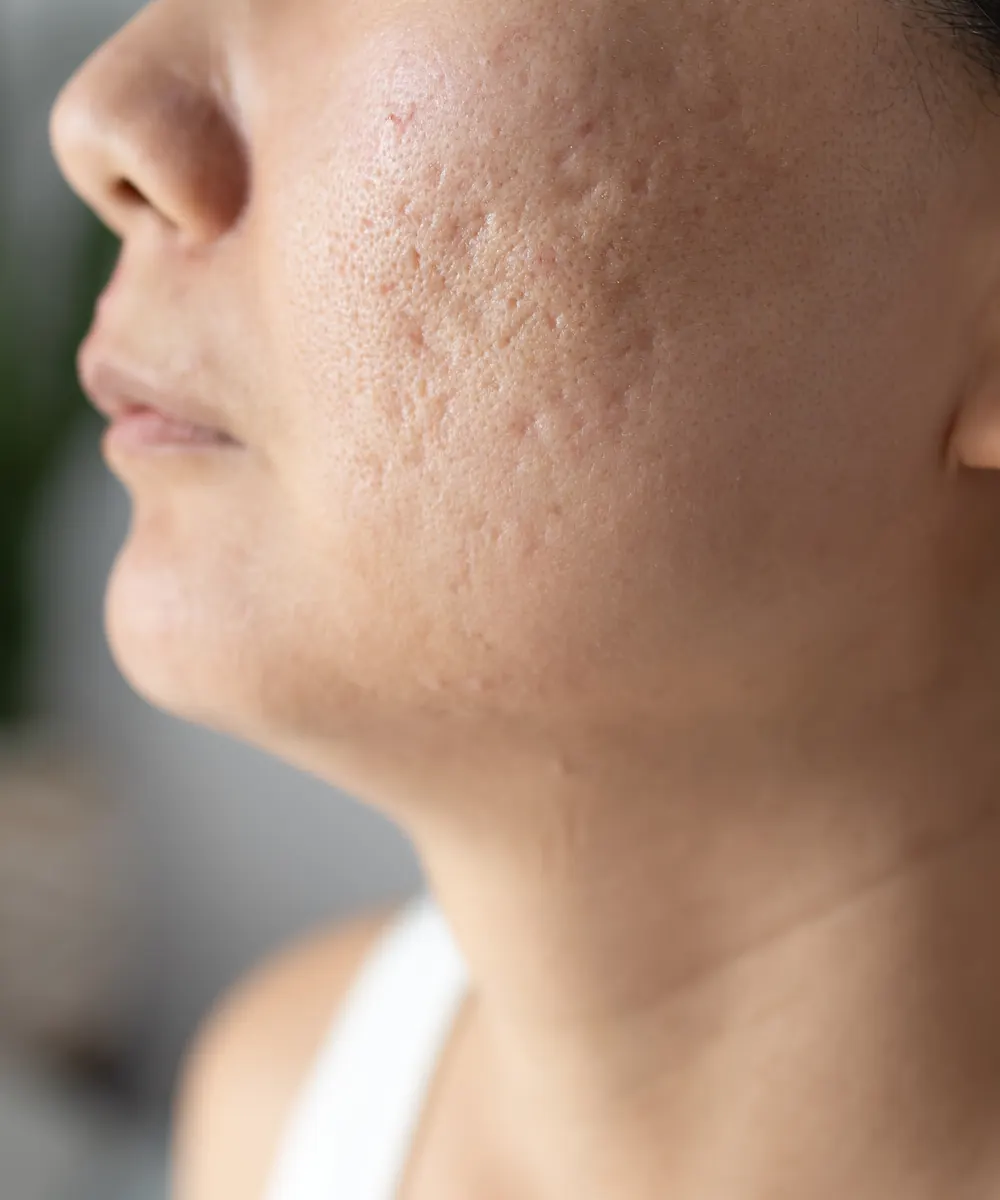
Scar type matters more than almost anything else.
Acne scar treatment is rarely one size fits all, because scars differ in shape and depth. Published reviews describe a clear pattern in how they respond to microneedling:
Most people have a mix of scar types, which is one reason a single approach rarely suits every scar on the face. Flat red or brown marks left after breakouts are also different from depressed scars, and they are assessed separately. Where deep or narrow scars dominate, we will say so honestly.
Some scar types may be better suited to laser skin rejuvenation, and some people want a lighter surface treatment instead. Our comparison of microneedling and chemical peels explains how each approaches scarring, so you can come to your consultation with the right questions.
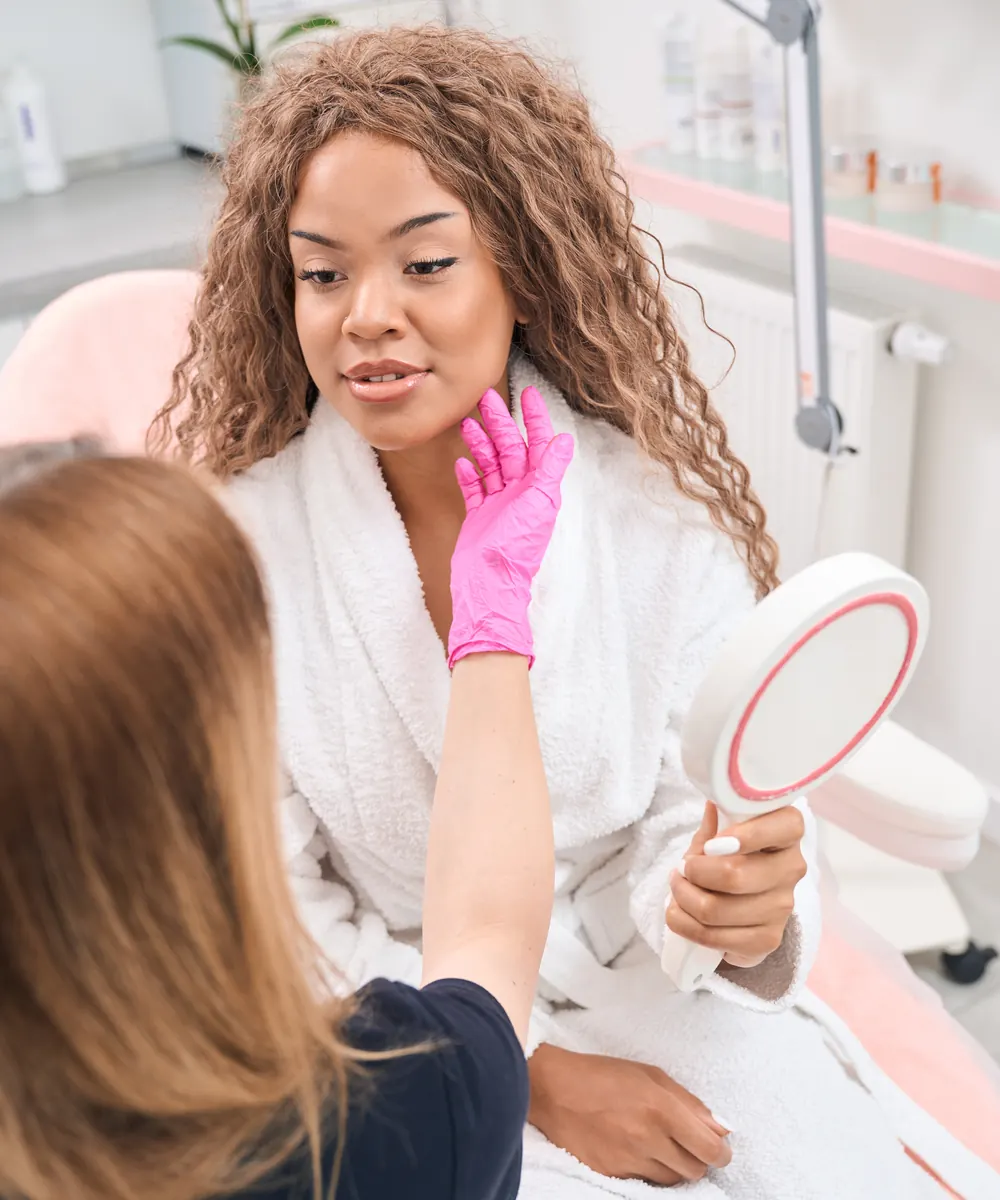
Why breakouts need to settle before scar treatment begins.
Microneedling is aimed at scars, not active acne. Active acne and infection in the treatment area are reasons to wait, and acne flare is among the reported side effects of microneedling, so we generally treat once breakouts are under control. If your acne is still active, settling it with your doctor usually comes first.
If you have taken isotretinoin, tell us at your consultation. The timing for you is decided with our medical director, based on your history. We also screen for cold sores, keloid scarring, bleeding disorders, blood thinning medication, a weakened immune system and pregnancy, each of which can mean waiting or choosing another route.
Acne scarring affects every skin tone, and microneedling can be suitable for many of them. Because the outer layer of the skin is largely preserved, it is generally regarded as a lower pigmentation risk than ablative resurfacing, but temporary darkening after treatment is still reported. Because deeper skin tones may be more prone to it, we assess your skin and adjust your plan.
Scar treatment plans here are made under the medical direction of Dr. Andrea Garcia, MD CCFP. Meet the team behind your care.

A series, spaced weeks apart, set at your consultation.
Acne scars rarely change meaningfully after a single session, and sources vary on the ideal course. The American Academy of Dermatology describes three to five treatments every two to four weeks as typical, while published reviews suggest a minimum of four to six sessions for significant improvement, spaced roughly three to eight weeks apart. Deeper treatment generally calls for longer gaps.
Your own number of sessions is set at your consultation, based on the type and depth of your scars. Between sessions, follow the written aftercare your provider gives you for microneedling and protect your skin from the sun. Our general aftercare guidance for our in-clinic treatments covers several of our other treatments.
Microneedling for Acne Scars Pricing
A DP4 microneedling treatment is $375 for the face and $450 for the face and neck. Acne scars usually need a series, and your number of sessions is set at consultation, so see our microneedling cost guide for how the total is shaped.
Questions about microneedling and acne scars, answered.
If your question is not answered here, our team is happy to help. The clearest answer usually comes from a consultation, where your provider can assess your skin directly.
Explore more of our microneedling guides and skin treatments in Oakville.
If acne scars are what bother you, a consultation is the place to start. We will look at your scar types, tell you honestly whether microneedling is likely to help, and explain what a series may involve.