
Skin boosters and dermal fillers are constantly compared, but they are not really alternatives. One improves your skin quality, the other changes its shape.
Here is an honest look at what each treatment does, who each one suits, and why the right answer for many people is one, the other, or both.
The short answer, before the detail.
Skin boosters and dermal fillers are often set against each other as though you have to pick a side. That framing is not very useful, because the two treatments are aimed at different things. A dermal filler changes shape. A skin booster changes skin quality. Asking which is better is a little like asking whether a builder or a decorator is better, because it depends entirely on what needs doing.
Both are usually based on hyaluronic acid, a substance the body already produces, which is part of why they are so easily confused. The real difference is how and where the product is placed, and what it is meant to achieve. Filler is placed deliberately in a specific site to support, restore or define a feature. A skin booster is distributed in fine deposits through an area so that hydration and texture improve across it.
Injectable products used in Canada are regulated by Health Canada, and which product suits you is a clinical decision made at your consultation, not from a web page.
Volume, structure and shape, with an immediate change.
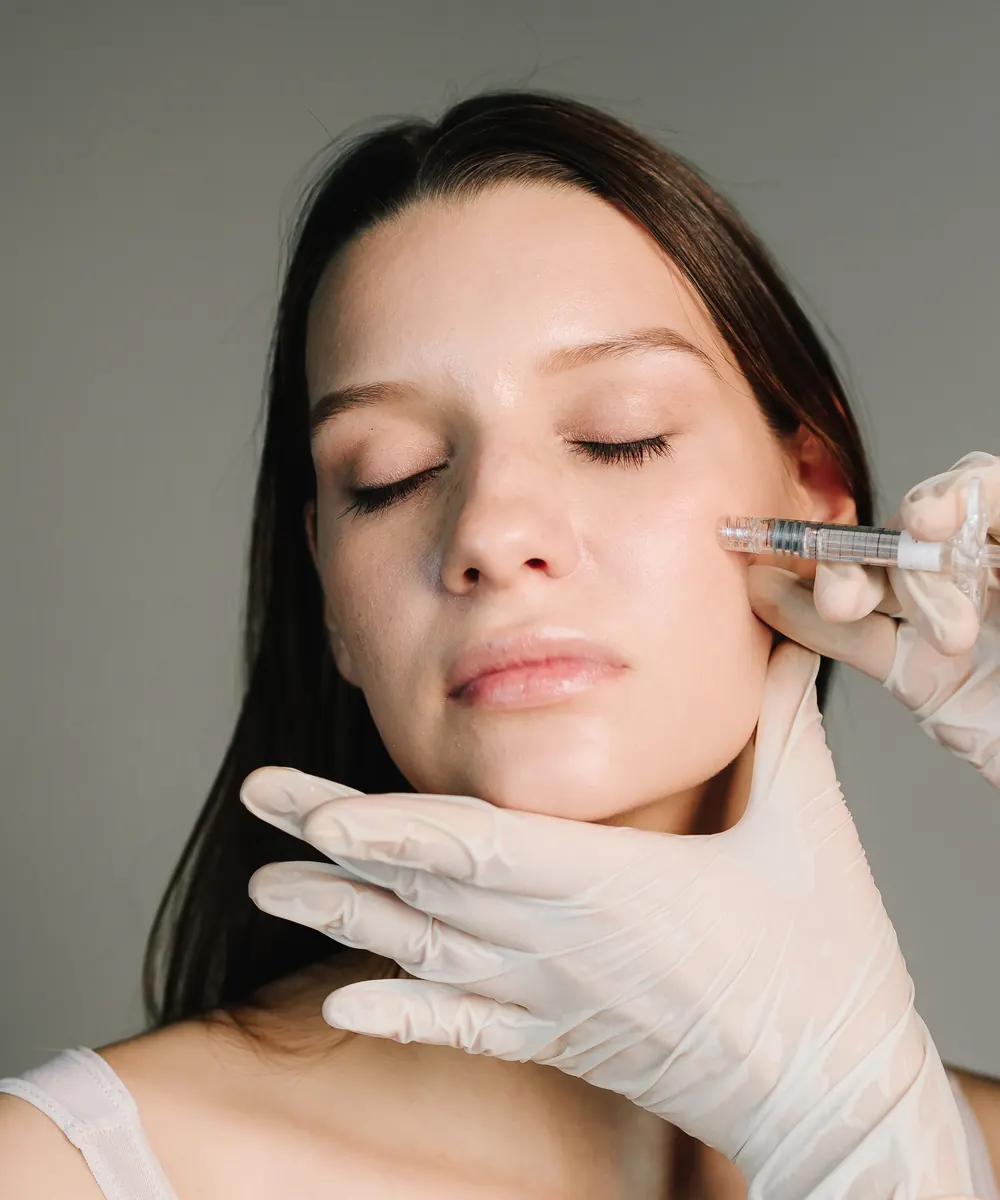
A dermal filler adds volume where volume has been lost, or supports a feature that would benefit from more structure. Because the gel occupies space, the change is generally visible straight away, and it can be placed precisely. That precision is why filler is usually the right tool when the concern is shape rather than surface. Fillers are commonly considered for:
You can read more in our guide to dermal fillers in Oakville, or look at a specific area such as cheek fillers, lip fillers, jawline fillers or under eye fillers. If your goal is proportion across the whole face rather than one feature, facial balancing may be the more useful place to start.
Hydration, smoothness and skin quality, built over weeks.
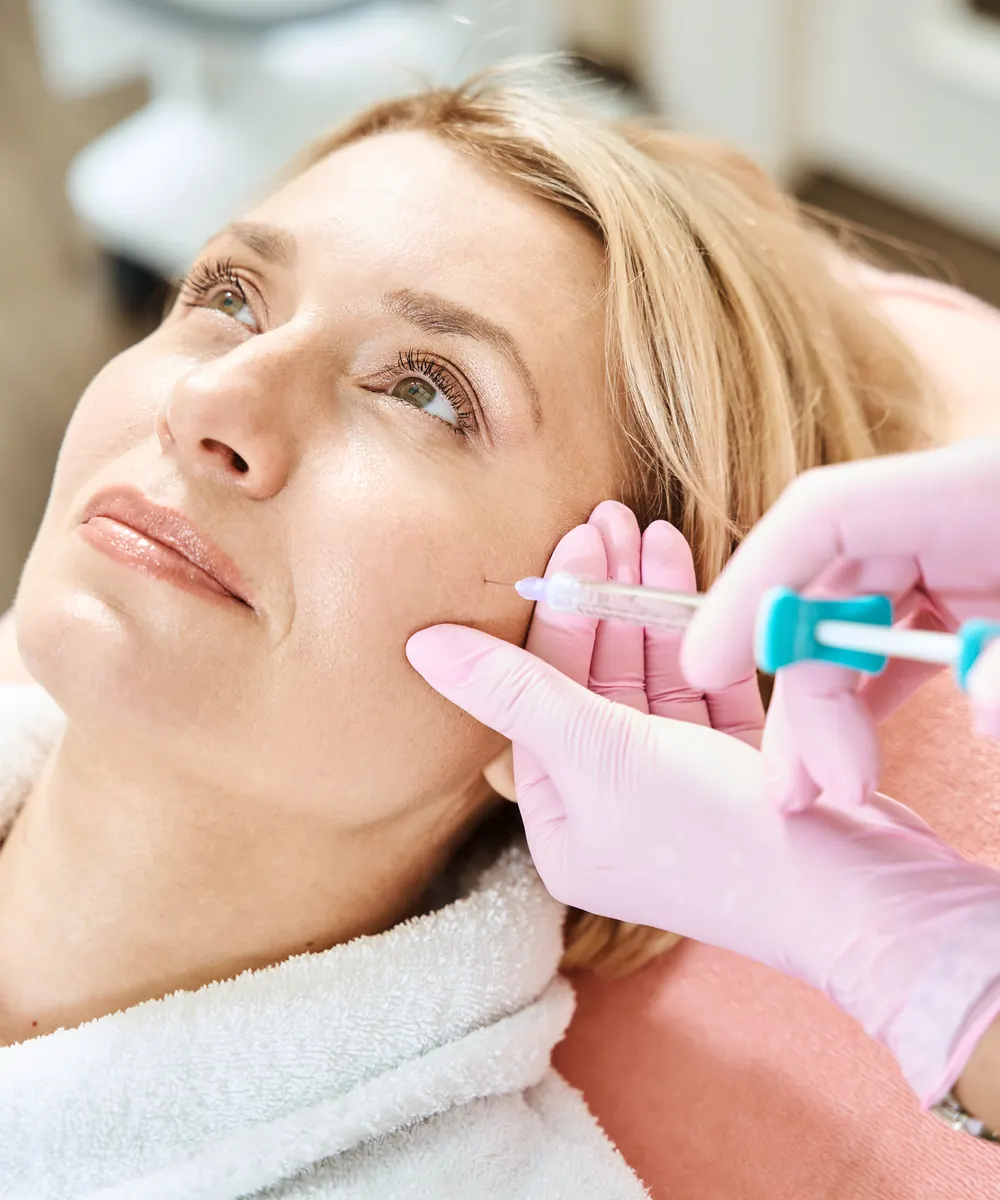
A skin booster does not fill anything. Small amounts of hydrating gel are placed in fine deposits across an area so hydration improves broadly rather than in one spot. Over the following weeks many people find the skin feels more supple and looks smoother and brighter. It is a change in the surface and feel of the skin, not in its shape, and it builds gradually. Skin boosters are commonly considered for:
The last two entries are the clearest case where the two treatments are not interchangeable. The neck, chest and hands often show ageing early, and they are not areas where adding volume is generally appropriate, so a treatment aimed at skin quality can be considered there when a volume treatment would not be. Our full guide to skin boosters in Oakville covers the treatment in more detail.

A consultation, not a guess.
Sometimes the honest answer is that neither treatment is right for you. We would rather say so than sell you a treatment that will not do what you hope. Our injectable treatments are provided by Lin Nickel, our Advanced Aesthetic Nurse Injector with more than 10 years of experience, under the medical direction of Dr. Andrea Garcia, MD CCFP. Learn more about how we work.
Skin Booster and Dermal Filler Pricing in Oakville
Skin boosters in Oakville start from $550, and dermal fillers also start from $550. Price is rarely the deciding factor, because the two are not treating the same concern, and choosing on cost alone tends to lead to the wrong treatment.
What your own plan involves depends on the areas treated and what you agree with your provider, so your total is confirmed at your consultation. See our full price list for current pricing.
The questions people ask when they are deciding between the two.
If you do not see your question here, our team is happy to help. The clearest answer comes from a consultation, where your provider can look at your structure and your skin quality separately.
Explore both sides of the comparison and what sits alongside them.
That is a good reason to book a consultation rather than a treatment. We will look at your facial structure and your skin quality separately, explain which treatment addresses which concern, and recommend only what is likely to help.