
DP4 Microneedling in Oakville

DP4 microneedling in Oakville uses the Dermapen 4, a professional microneedling pen, to create tiny controlled channels in the skin that may prompt your own collagen renewal. It is generally considered for uneven texture, fine lines, the look of enlarged pores and acne scarring on the face and neck.

Change builds gradually over weeks to months and usually takes a series of sessions, so we start with an honest assessment of your skin and of whether microneedling is the right tool for your concern at all.
OR Call (289) 885-5660

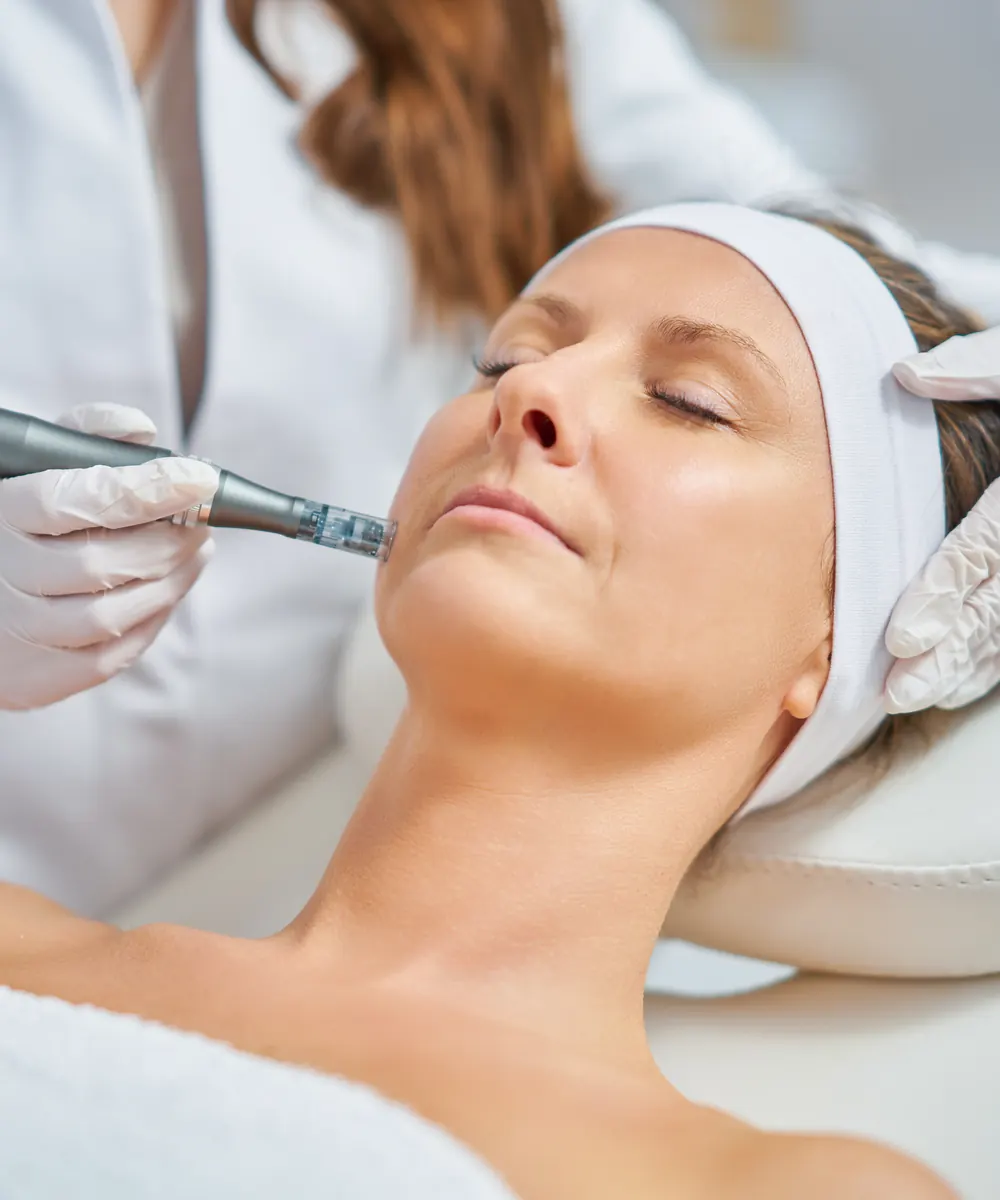
Gloved clinician holds a pen style microneedling device against the cheek of a relaxed woman

What Is DP4 Microneedling?

Collagen induction therapy, delivered with the Dermapen 4 pen.

Microneedling is also known as collagen induction therapy. Very fine needles create controlled micro-injuries in the skin, and those tiny channels start the skin’s natural wound healing response. Growth factors are released and, over the following months, the skin may lay down new collagen, while the outer layer of the skin stays largely intact.

DP4 is short for Dermapen 4, the pen we use for Dermapen microneedling at our clinic. Its needle depth is adjusted by your provider to the area being treated and the concern you want to address, rather than set to one number for everyone. We do not publish depth settings, because the right setting depends on your skin and is decided at your appointment.

Because the surface of the skin is not removed the way it is with ablative resurfacing, microneedling can be repeated as a series, and it is often considered where laser or deeper peels are less suitable. In a 2021 advisory, Health Canada said no microneedling devices had been authorized for at-home use, which is one reason this treatment belongs in a clinical setting.

DP4 microneedling is one of our minimally invasive treatments, and it follows the same consultation-first approach as everything else we do.

Woman in a white robe studies her skin thoughtfully in a round mirror

What DP4 Microneedling May Help With

Texture, fine lines, pores and acne scarring, with honest limits.

Microneedling works on the quality of the skin itself. People most often ask us about it for:

  • Uneven or rough skin texture
  • Fine lines in the skin of the face and neck
  • The look of enlarged pores
  • Rolling and boxcar acne scars, which tend to respond better than narrow ice pick scars
  • Skin that looks dull or lacks smoothness

Acne scarring is where much of the published research on microneedling sits. Our guide to microneedling for acne scars explains which scar types tend to respond, how many sessions are usually involved and what microneedling will not fix. If you are weighing it against a lighter surface treatment, our microneedling vs chemical peel comparison sets the two side by side.

What microneedling does not do is lift loose skin. If laxity along the jaw or neck is your main concern, Sofwave skin tightening is usually the more relevant conversation. For hydration and overall skin quality, skin boosters may suit you better, and for some resurfacing goals laser skin rejuvenation is an alternative.
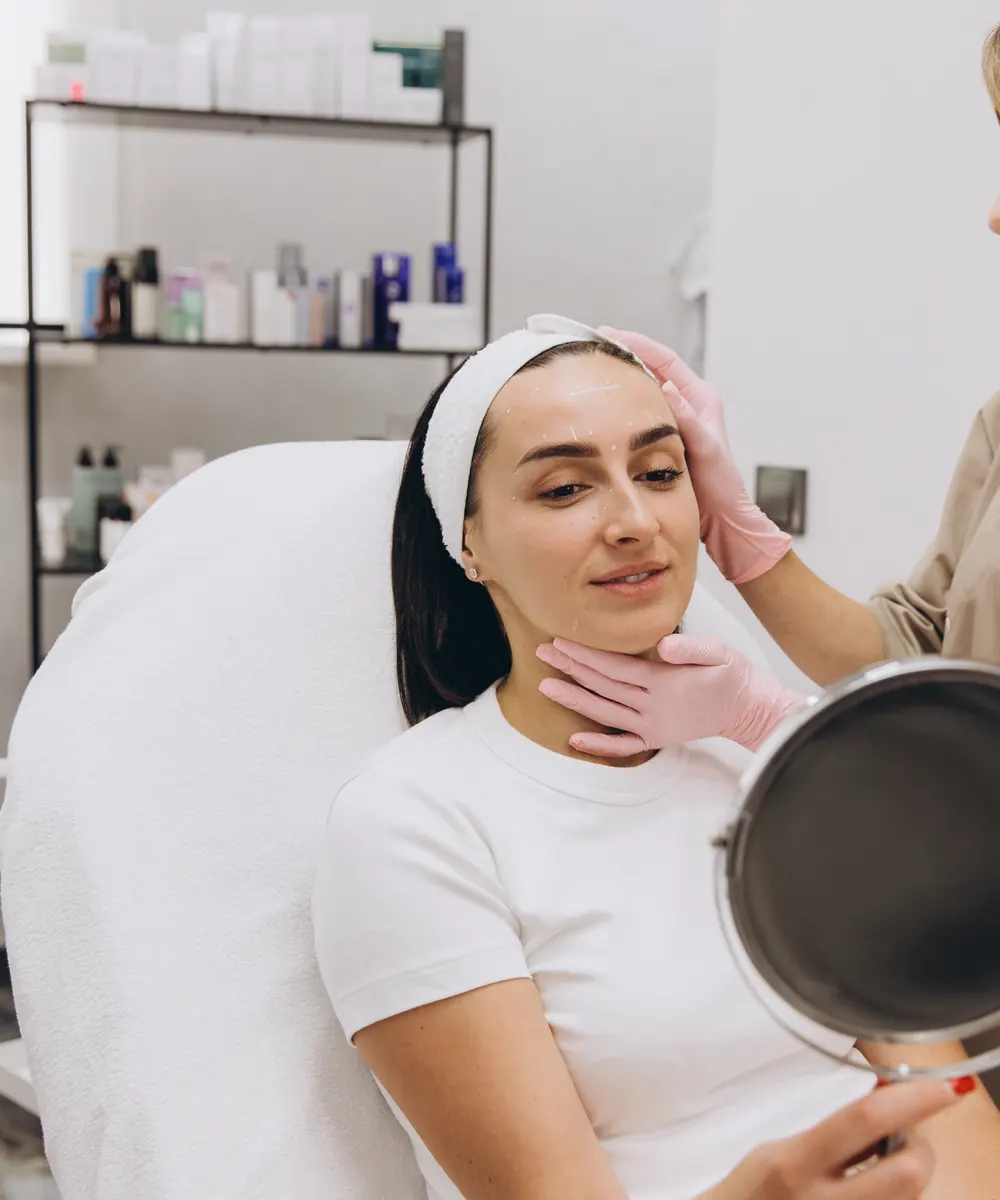
Woman in a treatment chair holds a hand mirror while a gloved clinician assesses her face

Your DP4 Microneedling Appointment, Step by Step

A consultation first, then a methodical treatment.

  1. AssessmentYour provider looks at your skin, your concern and your medical history, and confirms whether microneedling is a reasonable option for you.
  2. Your planYou agree the area to be treated, face alone or face and neck, and discuss how many sessions are likely to be worthwhile for your concern.
  3. PreparationYour skin is cleansed and prepared, and comfort measures are talked through with you before any needling begins.
  4. TreatmentThe DP4 pen is moved methodically across the area in passes, with needle depth adjusted to each zone.
  5. AftercareYou leave with aftercare guidance and a clear idea of when, or whether, a further session makes sense.

Microneedling is not painless. Sensation varies from person to person and generally increases with needle depth, so your provider will explain what to expect and discuss comfort measures with you beforehand. Your provider gives you written aftercare for microneedling so you know how to look after your skin in the days that follow, and our general aftercare guidance for our in-clinic treatments covers several of our other treatments.

Most people need a series rather than a single visit. Published reviews describe sessions spaced roughly three to eight weeks apart, with more sessions generally needed for scarring than for texture or fine lines, and deeper treatment calling for longer gaps. The number of sessions for you is set at your consultation.

Woman with long braids reads a form on a clipboard while seated on a sofa

Who Should Wait or Avoid Microneedling

Screening matters as much as the treatment itself.

Microneedling is not right for everyone, and some people simply need to wait. We generally postpone treatment, or suggest another route, if you have:

  • Active acne, a cold sore or another infection in the treatment area
  • Eczema, psoriasis or another chronic skin condition that is active in the area
  • A tendency to keloid scarring or poor wound healing
  • A bleeding disorder, or you take blood thinning medication
  • A weakened immune system, uncontrolled diabetes, or current chemotherapy or radiotherapy
  • Recent sun exposure or sunburn on the area

We generally recommend waiting until after pregnancy, as Health Canada lists pregnancy among the higher risk groups for microneedling. If you have taken isotretinoin, tell us, and the timing of your treatment is decided with our medical director. Microneedling can be suitable for many skin tones. Because deeper skin tones may be more prone to temporary darkening, we assess your skin and adjust your plan.

Screening decisions like these are made under the medical direction of Dr. Andrea Garcia, MD CCFP, which shapes how each microneedling plan here is assessed and explained. Meet the team behind your care.

Microneedling Downtime and Results

A few days of redness, then change that builds over months.

Redness on lighter skin, or darker shading on deeper skin tones, along with mild discomfort, is expected after treatment and usually settles within a few days to a week. Slight swelling for two to three days is also common, and many people return to work the next day. Your provider will tell you what to expect for your skin.

Results are not immediate. You may notice some improvement within a few weeks, but new collagen continues to form for roughly three to six months after treatment, so it usually takes several months before you see the full effect of a series. Judging your outcome a week after your first session will only mislead you.

How much change you see depends on your concern, your starting skin quality and how your own collagen responds, so results vary from person to person and cannot be guaranteed. Microneedling also does not stop your skin from aging, so whether and when to repeat treatment is something we plan with you.

DP4 Microneedling Pricing in Oakville

Face $375

A DP4 microneedling treatment for the face is $375, and a treatment for the face and neck is $450. Because most people need a series, your overall total depends on the number of sessions set at your consultation. For how that adds up, see our full microneedling cost guide, or review our complete price list before you book.

Frequently Asked Questions About Microneedling in Oakville

Questions about microneedling and your skin, answered.

If your question is not answered here, our team is happy to help. The clearest answer usually comes from a consultation, where your provider can assess your skin directly.

Does DP4 microneedling hurt?
It is not painless. Sensation varies from person to person and generally increases with needle depth, so some areas can feel more intense than others. Your provider will explain what to expect and discuss comfort measures with you before treatment begins.
How many microneedling sessions will I need?
It depends on your concern and how your skin responds, and the number is set at your consultation. Published reviews describe sessions spaced roughly three to eight weeks apart, with more sessions generally needed for acne scarring than for texture or fine lines.
How long is the downtime after microneedling?
Redness on lighter skin, or darker shading on deeper skin tones, is expected and usually settles within a few days to a week. Mild swelling for two to three days is also common. Many people return to work the next day, and your provider will give you aftercare guidance for your skin.
How soon may I see results, and how long do they last?
You may notice some improvement within a few weeks, but new collagen keeps forming for roughly three to six months, so full results usually take several months. Results are not permanent, because your skin continues to age, so whether and when to repeat treatment is something we plan with you.
Who should not have microneedling?
We generally advise waiting, or another route, if you have active acne, a cold sore or skin infection in the area, a tendency to keloid scarring, a bleeding disorder or blood thinning medication, a weakened immune system, or you are pregnant. If you have taken isotretinoin, tell us, and timing is decided with our medical director.
Can microneedling treat my neck as well as my face?
Yes. We offer DP4 microneedling for the face alone or for the face and neck together, with needle depth adjusted to each area. Microneedling may improve the texture and quality of the skin on the neck, but it does not lift loose skin, so if laxity is your main concern we may suggest Sofwave instead.

Book Your DP4 Microneedling Consultation in Oakville

If texture, fine lines or acne scarring are what bother you, a consultation is the place to start. We will look at your skin, tell you honestly whether microneedling is likely to help, and explain how many sessions may be worthwhile. Patients visit us from Oakville, Burlington, Mississauga and Milton.

IPL

A Category of Non-Invasive Treatment

IPL (Intense Pulsed Light) uses broad-spectrum light energy to target skin imperfections such as pigmentation, sun damage, redness, and acne.

IPL: Regular $500, Now $400

Hair Removal

A Category of Non-Invasive Treatment

Hair Removal is a non-invasive cosmetic procedure that is designed to permanently reduce or eliminate unwanted hair.

Hair Removal: Regular $80, Now $40

Thread Lift

A Category of Minimally Invasive Treatments

The Thread Lift is an instant and invisible procedure that uses advanced, dissolvable sutures meticulously placed beneath the skin to gently lift and redefine facial and neck contours.

Thread Lift: Regular $1600, Now $800

Lip Filler

A Category of Minimally Invasive Treatments

Lip filler is a cosmetic procedure that involves injecting hyaluronic acid into the lips to add volume, enhance shape, and smooth out vertical lip lines.

Lip Filler: Regular $550, Now $399

Microneedling

A Category of Minimally-Invasive Treatment

Microneedling is a highly effective, minimally invasive procedure that harnesses your body’s natural healing process to rejuvenate the skin from within.

Microneedling: Regular $375, Now: $300

Hydrofacial

A Refreshing Non-Invasive Approach

The hydrofacial is a highly sought-after, non-invasive facial that utilizes medical-grade aesthetic device for a complete skin renewal experience.

Hydrofacial: Regular $200, Now $99